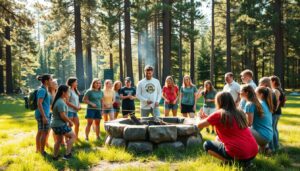
Camp activity leaders are key in shaping campers’ experiences. Exceptional leadership traits are vital for a positive and engaging setting.
Thank you for reading this post, don't forget to subscribe!Good camp counselors have a special mix of skills. They connect well with campers, manage activities, and build community. These qualities include strong communication skills, creativity, and the ability to adapt to diverse situations.
Knowing what makes a great camp leader helps organizations. They can then find and grow the right skills for unforgettable camping experiences.
Key Takeaways
- Exceptional leadership traits are key for camp activity leaders.
- Camp counselors need a special mix of skills and qualities.
- Strong communication skills are essential for effective camp leadership.
- Creativity and adaptability are vital for managing diverse camping situations.
- Developing the right skills can lead to memorable camping experiences.
The Critical Role of Activity Leaders at Camp
At the heart of every great camp are the activity leaders. They play a key role in shaping the camp experience. They make sure the camp is both fun and safe for everyone.
Balancing Fun and Safety
Activity leaders must balance fun activities with safety. They check risks, plan safe games, and get ready for emergencies. This way, campers have fun while staying safe.
For more info on activity leaders’ roles, visit camp leaders resources.
Being the Face of the Camp Experience
Activity leaders meet campers and their families first. They are ambassadors for the camp experience. They show the camp’s values and mission, shaping how people see the camp.
By using outdoor leadership skills and camper engagement strategies, leaders make campers’ experiences unforgettable. This makes the camp better known and loved.
Essential Personality Traits of Exceptional Camp Leaders
Great camp leaders have special qualities that make them loved by kids. These traits help make camp fun and safe. The American Camp Association says good leaders mix fun with safety. They are fun yet serious.
Enthuasiasm and Positive Energy
Being excited is key for camp leaders. They make activities fun and lively. This excitement spreads joy to everyone at camp.
Patience and Emotional Intelligence
Being patient and understanding is important. Leaders need to handle their feelings and those of the kids. This creates a safe and welcoming place for everyone.
“Leaders with high emotional intelligence can empathize with their campers, understand their needs, and respond appropriately.”
Authenticity and Relatability
Being real is vital for leaders. When they are themselves, kids trust them more. This makes camp more meaningful and fun.
| Trait | Description | Impact on Camp Experience |
|---|---|---|
| Enthuasiasm | Brings energy and excitement to activities | Creates a positive atmosphere |
| Patience | Enables understanding and managing emotions | Fosters a supportive environment |
| Authenticity | Builds trust and relatability | Strengthens camper-leader connection |
Technical Skills That Set Great Activity Leaders Apart
Great camp activity leaders have special skills. These skills help them do their job well. They make sure everyone has a good time at camp.
Activity-Specific Expertise
Leaders know a lot about the activities they lead. For example, a rock climbing leader must know how to teach climbing safely. This activity-specific expertise means campers get the best instruction.
They might know a lot about arts and crafts, outdoor survival, or sports. This knowledge helps them plan activities that fit the campers’ needs.
Instructional Techniques for Different Age Groups
Leaders must know how to teach different ages. Younger kids need fun, easy lessons. Older kids can handle more complex tasks.
Knowing what each age needs helps leaders plan engaging and challenging experiences. Younger kids might do more structured activities. Teenagers might have more freedom in their projects.
Outdoor Leadership Skills
Outdoor camps need leaders with outdoor leadership skills. These include knowing how to navigate, first aid, and teaching about nature. These skills keep campers safe and make their outdoor experiences better.
| Skill | Description | Importance Level |
|---|---|---|
| Activity-Specific Expertise | Knowledge specific to the activity being led | High |
| Instructional Techniques | Ability to adapt teaching methods to different age groups | High |
| Outdoor Leadership Skills | Skills necessary for leading outdoor activities safely and effectively | High |
Safety Management: The Foundation of Trust
Effective safety management is key to a great camp experience. It makes a place where campers can grow and feel safe. It includes many practices and rules to keep everyone safe.
Risk Assessment and Prevention
Risk assessment is very important. It finds and fixes possible dangers. Leaders must check each activity carefully.
They look at the campers’ age, the place, and the tools used. This helps prevent accidents.
Emergency Response Preparedness
Even with safety steps, emergencies can happen. So, leaders must be ready to act fast. They need plans, drills, and trained staff.
“Being ready is essential,” say safety experts. They also need the right tools, like first aid kits.
Creating Physically and Emotionally Safe Environments
Being safe is not just about the body. It’s also about feeling safe inside. Leaders should make a welcoming place for everyone.
They should help campers get along, stop bullying, and care for their feelings. This builds trust and happiness.

By focusing on both physical and emotional safety, leaders can make a great experience for everyone.
Communication Skills for Effective Leadership
Communication skills are key for leaders in camps. They affect every part of the camper’s time there. Counselors with strong communication skills make the camp better, creating a welcoming place for everyone.
Clear Instruction Delivery
It’s important for counselors to give clear instructions. This helps campers understand what to do and how to stay safe. Using simple words and showing how to do things helps avoid mistakes.
| Instructional Technique | Description | Benefit |
|---|---|---|
| Demonstration | Showing campers how to perform a task | Enhances understanding and builds confidence |
| Clear Verbal Instructions | Using simple and concise language | Reduces confusion and ensures safety |
| Visual Aids | Utilizing diagrams or videos to support instructions | Caters to different learning styles |
Active Listening with Campers
Listening well is a must for counselors. It lets them know what campers need and feel. By listening and showing they care, counselors build trust and a supportive atmosphere.
Communicating with Parents and Staff
Counselors also need to talk well with parents and staff. Keeping them updated on what’s happening with campers is important. Counselors should be open, friendly, and professional in their talks.
Good communication skills help counselors make the camp a great place. They show important camp counselor qualities and help everyone work well together, leading to effective team building.
What Makes a Great Camp Activity Leader: A Comprehensive View
The best camp activity leaders mix different leadership skills. They make sure campers have a good time and feel supported. This mix is key to a great camp experience.
Balancing Authority with Approachability
Great leaders are both in charge and easy to talk to. They need to be firm but also kind. Exceptional leadership traits mean they earn respect without scaring anyone.
They should watch their body language and voice. This helps them connect with campers. Being friendly builds trust, which is vital for a great camp.
Creating Memorable Experiences
Leaders aim to make experiences campers will remember. They plan fun, meaningful activities. A summer camp program director makes sure these activities meet everyone’s needs.
They use camper engagement strategies like team-building and outdoor fun. This way, everyone gets to enjoy and learn in their own way.

Embodying the Camp’s Values and Mission
Good leaders are more than just activity planners. They live the camp’s values every day. They show others what it means to be part of the camp community.
| Camp Values | Leader’s Role | Camper Impact |
|---|---|---|
| Respect | Demonstrate respect in all interactions | Camper feels valued and heard |
| Teamwork | Encourage collaboration among campers | Camper develops social skills and builds friendships |
| Adventure | Provide opportunities for new experiences | Camper steps out of their comfort zone and grows |
By living the camp’s values, leaders create a united community. This makes camp a special place for everyone. It makes the experience more fun and meaningful.
Camper Engagement Strategies
To make a camp experience great, leaders need to use camper engagement strategies. It’s about knowing what campers need, leading in a way that includes everyone, and helping those who are shy to join in.
Understanding Developmental Needs
Campers are different because of their backgrounds and how physically and emotionally they’ve developed. Knowing these needs helps make activities fun and challenging. Younger campers might need more help, while older ones like more freedom.
- Find out how old and skilled campers are
- Make activities that fit their developmental stages
- Make sure activities are safe and open to everyone
Inclusive Leadership Practices
Inclusive leadership means making sure every camper feels important and included. Leaders need to know about the different needs of campers, like those with disabilities or from different cultures. They should work to make a place where everyone wants to join in.
- Use special equipment for campers with disabilities
- Teach about different cultures through activities
- Help campers work together and support each other
Motivating Reluctant Participants
Some campers might be scared, shy, or unsure. Helping these campers is a big challenge. Leaders can offer choices, give positive feedback, and make sure activities are fun and safe.
- Find out why a camper is shy
- Give them personal encouragement and help
- Start with easy activities and slowly add more challenges
By knowing what campers need, leading in an inclusive way, and encouraging shy ones, youth camp instructors can make a great camp. Team building among staff is also key. It helps everyone work together and makes sure campers have a good time.
Problem-Solving and Adaptability in Camp Settings
Camp settings are always changing, needing leaders to be good at problem-solving and adaptability. They must handle unexpected problems, plan for different weather, and meet the needs of all campers. This is key for a great camp experience.
Handling Unexpected Challenges
Challenges can pop up anytime at camp. Good leaders can think on their feet and act fast. They might solve camper fights, fix broken gear, or deal with sudden mood changes.
- Stay calm and figure out the problem
- Talk clearly with campers and staff
- Find a solution and check if it works
Weather Contingency Planning
Weather can change camp plans a lot. Leaders need to adjust based on weather forecasts. They might have indoor plans or change outdoor activities for safety.
- Keep an eye on weather forecasts
- Have a plan B for outdoor fun
- Make sure campers are ready for weather changes
Adapting to Diverse Camper Needs
Camps have campers with many different needs and skills. Leaders must adapt activities to include everyone. This means changing games, adding support, or giving other options for different needs.
- Know what each camper needs and can do
- Change activities to be fair for everyone
- Help and cheer on all campers
By being great at problem-solving and adaptability, camp leaders can make sure everyone has a good and safe time, no matter what happens.
Effective Team Building and Collaboration
Summer camps succeed when leaders build and manage teams well. Team building and collaboration are key for a fun and cohesive camp. Leaders must work well with co-counselors, support junior staff, and help campers get along.
Working with Co-Counselors
Teaming up with co-counselors is vital at summer camps. Effective communication and clear role definition help co-counselors work together smoothly. Leaders should meet regularly with co-counselors to talk about progress and plan activities.
This teamwork makes the camp better for everyone. For more on team activities, check out Ontario camps with team activities.
Supporting Junior Staff
Helping junior staff grow is key for the camp’s success. Leaders should mentor and guide them, helping them become better leaders. This includes giving feedback, training, and letting them help plan.
By supporting junior staff, leaders build a stronger team.
Facilitating Group Dynamics Among Campers
Creating a friendly camp atmosphere is important. Leaders can do this by planning team-building activities and icebreaker games. These help campers get to know each other and feel part of a community.
This way, campers learn social skills and have a great time.
In summary, team building and collaboration are essential for summer camps. By working well with co-counselors, supporting junior staff, and helping campers get along, leaders make the camp experience unforgettable.
Conclusion: The Lasting Impact of Great Camp Leaders
Great camp leaders change lives. They touch campers, staff, and the whole camp community. Their skills and qualities leave a mark that lasts long after summer ends.
Camp counselors need to be full of energy, patient, and real. These traits help create a positive place. Exceptional leadership helps campers grow confident, independent, and good at working together.
Great leaders mix fun with safety, making memories that teach social skills and how to communicate. They aim for the best, leaving a lasting effect on campers’ lives.
Thinking about great camp leaders shows their impact goes beyond the camp. They spark a love for learning, teamwork, and adventure that lasts forever.
FAQ
What are the key qualities of a great camp activity leader?
Great camp activity leaders are full of enthusiasm and patience. They also have emotional intelligence and are true to themselves. This mix helps them make camp fun and safe for everyone.
How do activity leaders ensure camper safety while promoting fun?
They make sure campers are safe by checking for risks and getting ready for emergencies. They also create a safe space for campers’ minds and bodies.
What technical skills are required for activity leaders to excel?
They need to know how to lead outdoor activities and teach in a way that works for all ages. They also need skills for leading groups well.
How can activity leaders effectively communicate with campers and staff?
They communicate well by giving clear instructions and listening actively. They also talk well with parents and other staff members.
What strategies can activity leaders use to engage campers?
They can get campers involved by knowing what stage of development they are in. They also make sure everyone feels included and encourage those who are shy.
How can activity leaders handle unexpected challenges and adapt to diverse camper needs?
They stay flexible and plan for surprises. They also meet the needs of each camper, making sure everyone has a good time.
What is the importance of team building and collaboration in camp settings?
Teamwork is key in camps. It helps leaders work well with others and support new staff. It also helps campers get along better.
How can activity leaders embody the camp’s values and mission?
They live the camp’s values by understanding and showing them. They make memories and balance being in charge with being friendly.
What is the lasting impact of great camp leaders?
Great leaders leave a mark by making camp a positive place. They help campers grow and love the outdoors and teamwork for life.